
Why Is the Polar Vortex Moving South? The Science Behind Cold Snaps
Sources reviewed: 2026-07-16
Definitions, thresholds, and safety guidance are checked against the primary sources listed below.
Every winter, the headlines return: "Epic polar vortex to rip through the country!" It sounds like a disaster movie. In reality, the polar vortex isn't a storm and isn't new — it's a permanent feature of our planet's atmosphere. What changes is how far south its frigid air escapes. Let's answer the question everyone types into search: why is the polar vortex moving south?
What Is the Polar Vortex?
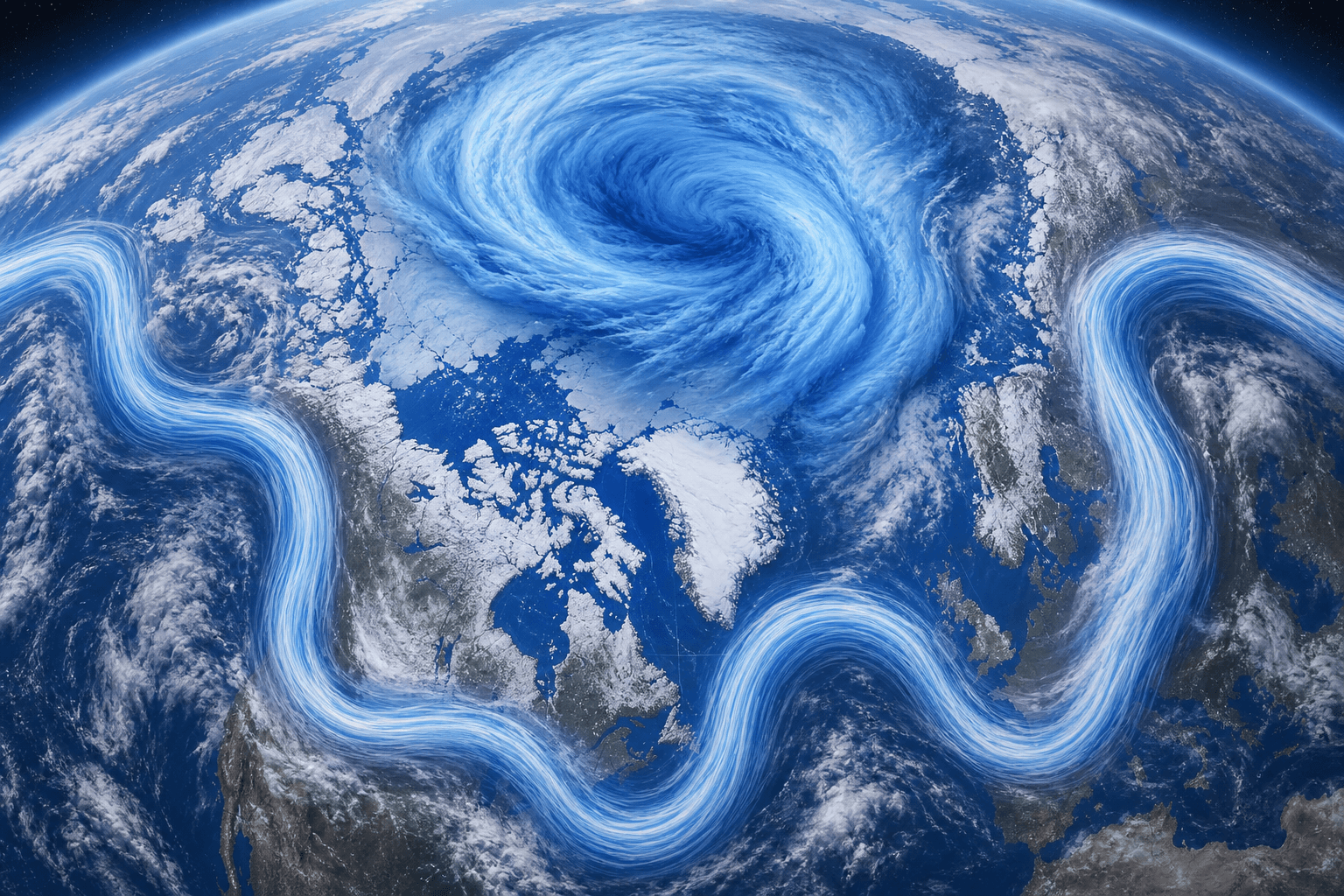
The polar vortex is a large, permanent area of low pressure and cold air that circles each of Earth's poles, high up in the stratosphere. Picture a spinning cap of cold air locked over the top of the world.
- It's not new: it exists year-round, weakening in summer and strengthening in winter.
- It's not a storm: it sits far above the weather we experience at the surface.
- There are two: one over the Arctic and one over Antarctica.
Why Does the Polar Vortex Move South?
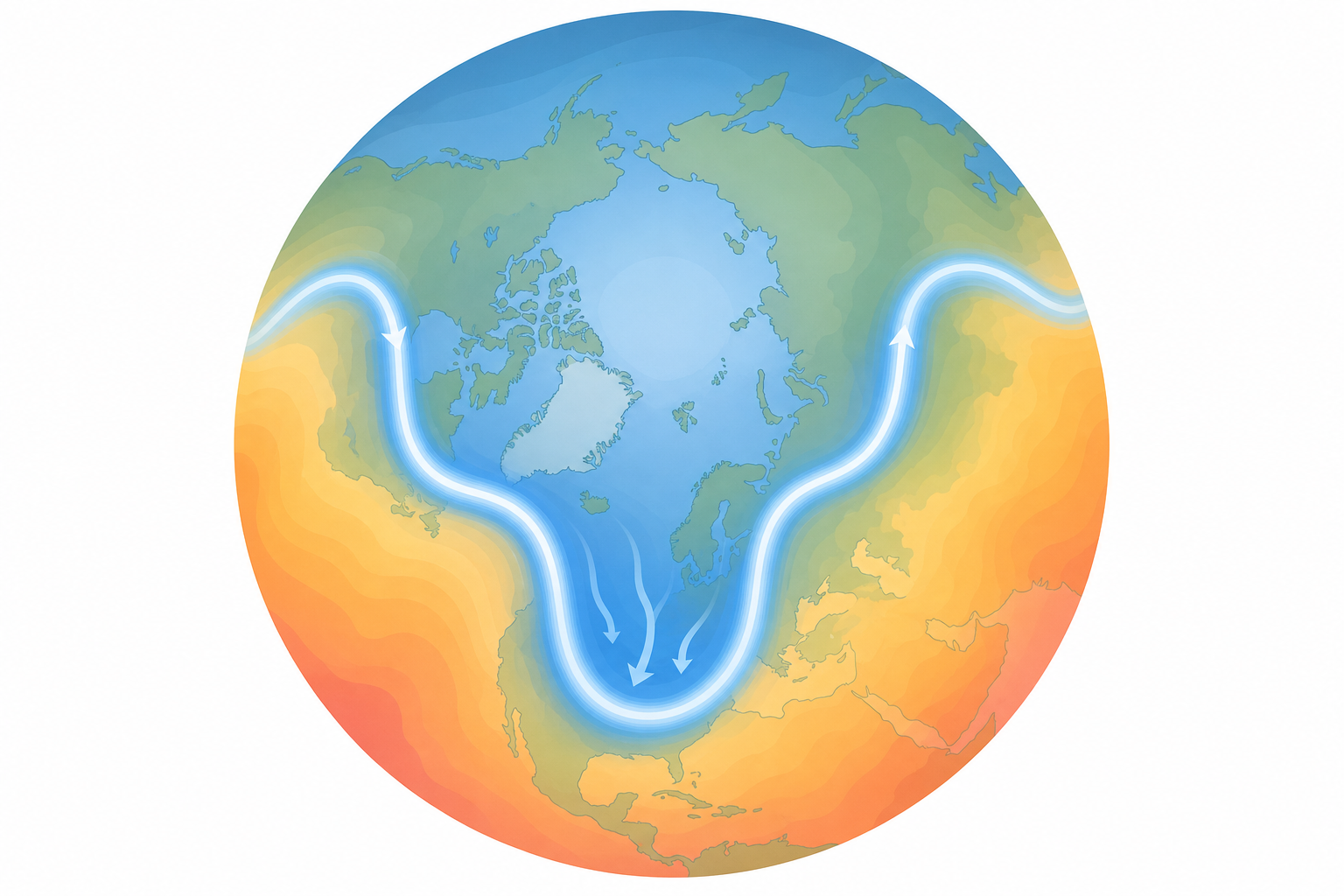
The answer is a "broken fence" — the jet stream. Normally, this fast-flowing river of air high in the atmosphere acts like a fence, keeping the coldest air corralled near the Arctic.
But the jet stream doesn't always flow in a tight circle. When it weakens, it buckles into big north–south waves. Where a wave dips south, arctic air spills out with it — into North America, Europe or Asia. That's a cold snap. It's like leaving the freezer door open: the cold air pours out into the warm kitchen.
What Weakens the Jet Stream?
- Sudden Stratospheric Warming (SSW): a rapid burst of warming high in the stratosphere can slow, stretch or even split the polar vortex, sending cold air southward weeks later.
- A warming Arctic: as the Arctic warms faster than the tropics, the temperature contrast that powers the jet stream shrinks, making it more likely to wobble.
- Natural variability: the atmosphere is chaotic; sometimes the jet stream simply meanders on its own.
What a Polar Vortex Outbreak Feels Like
When arctic air arrives, temperatures can crash 15–30°C below normal within a day or two. Add wind and the wind chill can push the "feels like" temperature dangerously low, with frostbite possible on exposed skin in minutes. Outbreaks also strain power grids, burst pipes, and disrupt flights and roads.
Is Climate Change Involved?
This is an active area of research. Some scientists argue that a rapidly warming Arctic reduces the pole-to-equator temperature difference, weakening the jet stream "fence" and making southward cold outbreaks more likely. The link is still debated, but it points to a counter-intuitive idea: a warming planet can still deliver occasional brutal cold snaps to the mid-latitudes.
How to Stay Safe in Extreme Cold
- Dress in layers and cover extremities — most heat is lost from the head, hands and feet.
- Limit time outdoors when wind chills are extreme; know the signs of frostbite and hypothermia.
- Protect your home: let faucets drip to prevent frozen pipes and keep a backup heat source in case of outages.
- Check on elderly neighbors, and never run generators or grills indoors.
Myth vs fact
Myth: "The polar vortex is a giant storm heading our way." Fact: it's a permanent band of cold air aloft — what makes news is a wavy jet stream letting some of that air slide south.
References: National Weather Service (NWS), UK Met Office, NOAA.
Sources and further reading
These primary sources were used to check definitions, thresholds, safety guidance, and scientific context.
Sources reviewed: 2026-07-16
- NOAA NESDIS: What Is the Polar Vortex?
Polar-vortex definition and its relationship with the jet stream and cold outbreaks.
What AnyWeather adds
We distinguish the persistent polar circulation from the cold-air outbreaks that can occur when its configuration changes.
This article is an independent synthesis of public sources; the listed institutions do not endorse AnyWeather. For weather or health risks, prioritize local official alerts and professional advice.
Frequently Asked Questions
What is the polar vortex in simple terms?
The polar vortex is a large, permanent area of cold, low-pressure air that circles each of Earth's poles high in the stratosphere. It is always there — strengthening in winter and weakening in summer — and is not a storm.
Why is the polar vortex moving south?
When the jet stream weakens and buckles into big waves, its southward dips let cold arctic air escape from the poles into the mid-latitudes. It's like leaving a freezer door open — the cold air spills out, causing a cold snap.
Does the polar vortex mean climate change isn't real?
No. A rapidly warming Arctic may actually weaken the jet stream and make some southward cold outbreaks more likely. A warming planet can still produce occasional extreme cold snaps in the mid-latitudes, even as overall temperatures rise.
How cold can a polar vortex outbreak get?
Temperatures can drop 15–30°C below normal, and strong winds can push the wind chill much lower. In extreme cases, frostbite can occur on exposed skin within minutes, so limiting time outdoors and dressing in layers is important.
Related Articles
Understanding Air Quality Index (AQI): Everything You Need to Know
What is AQI? How is it calculated? What do the different levels mean? This article explains the Air Quality Index to help you protect your respiratory health.
ReadHeat Index vs Feels Like: What's the Difference Between Actual and Feels Like Temperature?
Why does 20C sometimes feel like 10C? It's all about the 'Feels Like' temperature. Learn about wind chill and heat index to dress smarter.
ReadEl Niño vs La Niña: How Ocean Cycles Direct Global Weather
From grocery prices to hurricanes, from mild winters to droughts, El Niño and La Niña quietly steer weather worldwide. Here's what they are, why they happen, how long they last, and how scientists track them.
Read