
Understanding Weather Patterns: A Beginner's Guide
Sources reviewed: 2026-07-16
Definitions, thresholds, and safety guidance are checked against the primary sources listed below.
Have you ever wondered why it rains when it does, or how meteorologists know a storm is coming? Weather shapes our daily lives — what we wear, how we commute, whether the trip goes ahead. The good news: a handful of simple ideas explain most of what you see in the sky. This beginner's guide breaks them down.
What Drives the Weather?
At its core, weather is powered by the sun. Solar energy heats the Earth's surface unevenly — the equator far more than the poles, land faster than water. Those temperature differences create differences in air pressure, and the atmosphere is constantly trying to even them out. That movement of air and moisture is weather.
High and Low Pressure Systems
Forecasters constantly mention "high" and "low" pressure. Here's the simple version:
- High pressure (H): air sinks, which suppresses cloud formation. Highs usually mean calm, clear, settled weather. A big "H" on the map is generally good news.
- Low pressure (L): air rises, cools and condenses into clouds. Lows bring clouds, wind and precipitation — often the "bad weather" maker.
Air always flows from high to low pressure. The bigger the pressure difference over a short distance, the stronger the wind.
Fronts: Where Air Masses Collide
A front is the boundary between two air masses of different temperature. Fronts are where the most active weather happens.
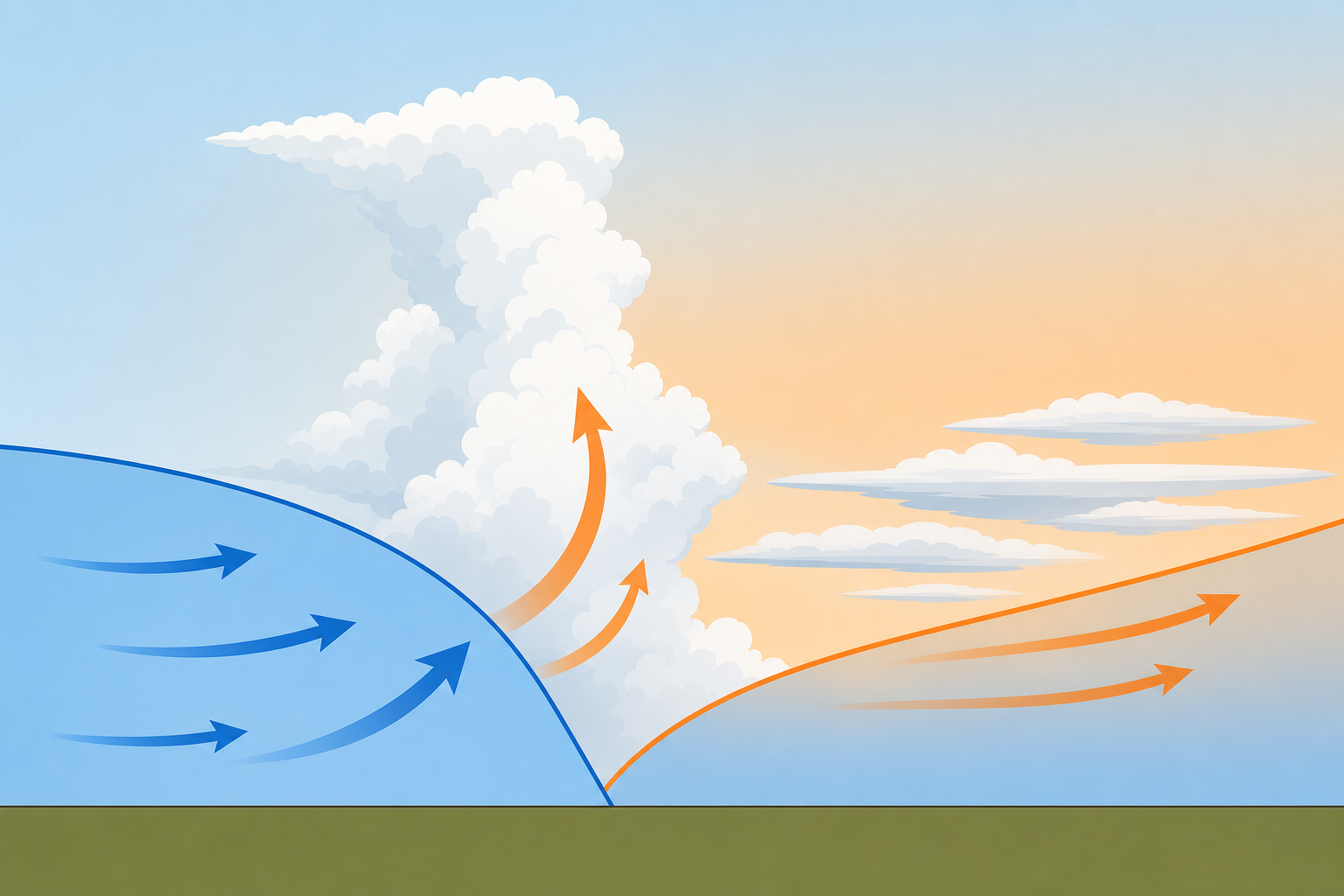
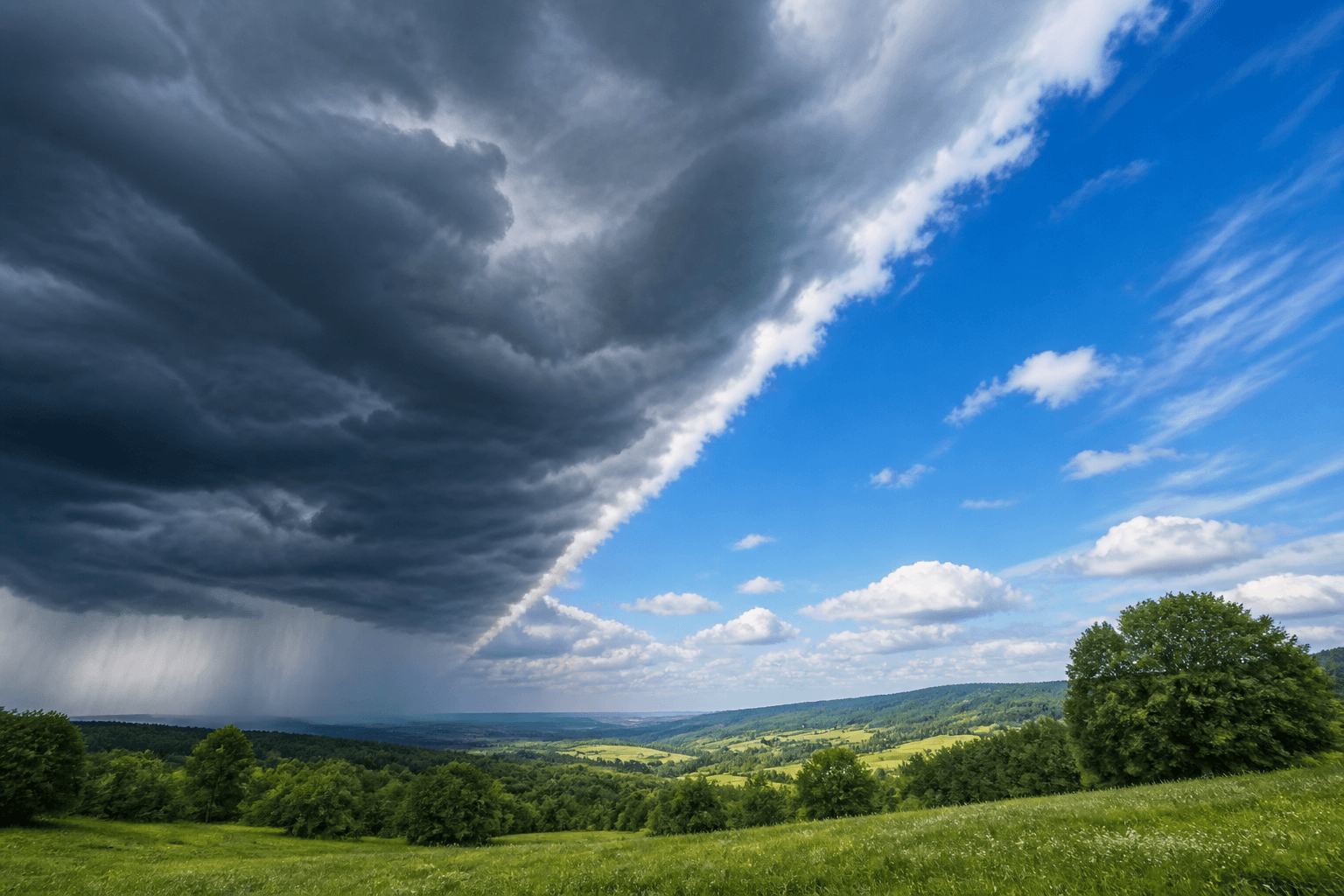
- Cold front: cold air plows into warmer air and shoves it up fast. Expect a sharp burst of thunderstorms or heavy rain, then a quick clearing to cooler, drier, breezier conditions.
- Warm front: warm air glides up and over retreating cold air. Expect a longer spell of steady, lighter rain or snow, followed by milder air.
The Jet Stream: The Steering Wheel
High overhead, a fast ribbon of wind called the jet stream steers these pressure systems and fronts around the globe. When it's straight and fast, weather moves through quickly. When it buckles into big waves, systems can stall — parking heat, cold, or rain over one region for days.
Reading the Sky and the Forecast
You don't need instruments to anticipate change. A few reliable clues:
- Falling pressure (or a barometer dropping) often signals an approaching low and unsettled weather.
- High wispy clouds thickening into a grey sheet frequently precede a warm front and rain.
- A sudden wind shift and temperature drop often mean a cold front just passed.
The one-line summary
Sun creates uneven heat → heat creates pressure differences → air moves from high to low → fronts and the jet stream organize it into the weather you feel.
Source: National Weather Service, World Meteorological Organization.
Sources and further reading
These primary sources were used to check definitions, thresholds, safety guidance, and scientific context.
Sources reviewed: 2026-07-16
- NOAA: JetStream: An Online School for Weather
Foundational explanations of atmospheric circulation, fronts, clouds, and forecasting.
What AnyWeather adds
We connect pressure, fronts, moisture, and upper-air flow into a practical sequence for reading a forecast.
This article is an independent synthesis of public sources; the listed institutions do not endorse AnyWeather. For weather or health risks, prioritize local official alerts and professional advice.
Frequently Asked Questions
What causes weather in the first place?
Weather is driven by the sun heating the Earth unevenly. Those temperature differences create air-pressure differences, and as air moves from high to low pressure — carrying moisture with it — we get wind, clouds and precipitation.
What is the difference between high and low pressure?
In high pressure, air sinks and suppresses clouds, so it usually means calm, clear weather. In low pressure, air rises, cools and condenses into clouds, bringing wind and precipitation. Air flows from high to low pressure, and bigger differences create stronger winds.
What's the difference between a cold front and a warm front?
A cold front is cold air pushing into warm air, lifting it quickly and often causing a short burst of thunderstorms, then cooler, drier air. A warm front is warm air gliding over cool air, bringing a longer period of steady, lighter rain or snow followed by milder conditions.
How can I predict weather changes myself?
Watch the trend: falling pressure and high clouds thickening into a grey sheet often mean rain is approaching, while a sudden wind shift with a temperature drop usually means a cold front just passed.
Related Articles
Understanding Air Quality Index (AQI): Everything You Need to Know
What is AQI? How is it calculated? What do the different levels mean? This article explains the Air Quality Index to help you protect your respiratory health.
ReadHeat Index vs Feels Like: What's the Difference Between Actual and Feels Like Temperature?
Why does 20C sometimes feel like 10C? It's all about the 'Feels Like' temperature. Learn about wind chill and heat index to dress smarter.
ReadEl Niño vs La Niña: How Ocean Cycles Direct Global Weather
From grocery prices to hurricanes, from mild winters to droughts, El Niño and La Niña quietly steer weather worldwide. Here's what they are, why they happen, how long they last, and how scientists track them.
Read