
Understanding Hail: How Ice Balls Form in Thunderstorms
AnyWeather Editorial Team
Last updated: 2026-02-01
Based on public meteorological and environmental sources, plus AnyWeather data documentation.
What is Hail?
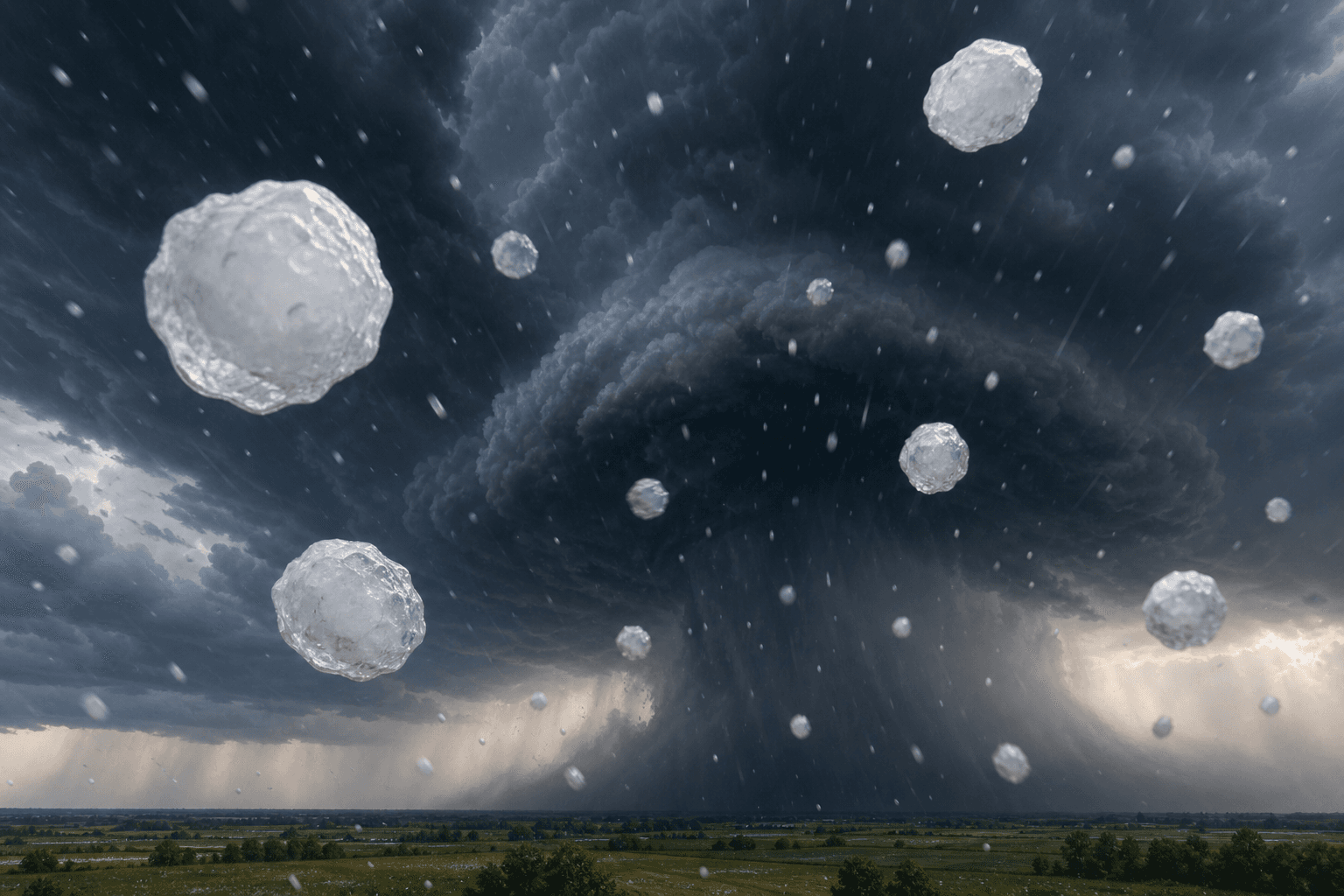
Hail is a form of precipitation consisting of solid ice balls or lumps called hailstones. Unlike snow, which forms from water vapor freezing directly, hail requires powerful updrafts within thunderstorms to form. Hail can range from pea-sized (about 1/4 inch) to grapefruit-sized (4+ inches) in diameter.
How Does Hail Form?
Hail formation is a fascinating process:
- Updraft Carries Water Upward: Strong updrafts in thunderstorms carry raindrops high into the atmosphere where temperatures are below freezing
- Freezing Begins: Raindrops freeze on contact with particles like dust, forming the hailstone's center
- Cyclone Development: Powerful updrafts keep hailstones suspended, where they collect more supercooled water droplets
- Layering: Each trip through the freezing level adds another layer of ice, similar to tree rings
- Gravity Wins: When hailstones become too heavy for the updraft to support, they fall to the ground
What Makes Some Storms Produce More Hail?
Not all thunderstorms produce hail. Conditions favoring large hail include:
- Strong updrafts: The faster the updraft, the longer hailstones stay aloft and grow
- High moisture content: More water available to form larger hailstones
- Deep freezing levels: Atmosphere must be cold enough at high altitudes
- Instability: Large temperature difference between surface and upper atmosphere
Hail Sizes and Damage Potential
| Size | Comparable To | Damage Potential |
|---|---|---|
| Pea | 1/4 inch | Minimal |
| Marble | 1/2 inch | Minor damage to plants |
| Ping Pong Ball | 1.5 inches | Can damage vehicles |
| Golf Ball | 1.75 inches | Significant vehicle damage |
| Baseball | 2.75 inches | Major damage possible |
| Grapefruit | 4+ inches | Severe damage, life-threatening |
Hail Safety Tips
- Seek shelter immediately when hail is reported or appears imminent
- Stay away from windows during severe hail
- Cover exposed body parts if caught outdoors with no shelter
- Protect vehicles by parking in garages when possible
- Wait 30 minutes after the last thunder before going outside
Source: National Weather Service, NOAA
Frequently Asked Questions
How does hail form?
Hail forms when strong thunderstorm updrafts carry raindrops high into the freezing part of the atmosphere. The drops freeze, then get suspended and coated with more supercooled water on repeated trips up and down, adding layers of ice like tree rings. When a hailstone becomes too heavy for the updraft, it falls to the ground.
How big can hail get?
Hail ranges from pea-sized (about 1/4 inch) to grapefruit-sized (4+ inches). The stronger the updraft, the longer stones stay aloft and the larger they grow. Golf-ball-sized hail or bigger can cause significant vehicle and roof damage.
How can I stay safe during a hailstorm?
Seek shelter indoors immediately, stay away from windows, and park vehicles in a garage if possible. If caught outdoors, cover your head and exposed skin, and wait about 30 minutes after the last thunder before going back out.
Is hail the same as sleet?
No. Hail forms in thunderstorm updrafts and can be large, so it mainly occurs in warmer months. Sleet is small ice pellets that form when raindrops freeze on the way down in cold winter weather. They form in completely different ways.
Related Articles
Understanding Air Quality Index (AQI): Everything You Need to Know
What is AQI? How is it calculated? What do the different levels mean? This article explains the Air Quality Index to help you protect your respiratory health.
ReadHeat Index vs Feels Like: What's the Difference Between Actual and Feels Like Temperature?
Why does 20C sometimes feel like 10C? It's all about the 'Feels Like' temperature. Learn about wind chill and heat index to dress smarter.
ReadThe UV Index Guide: More Than Just Sunburn
Invisible but powerful. Learn what the UV Index means, what each level requires, how UVA and UVB damage your skin, and the smartest ways to protect yourself.
Read