
The UV Index Guide: More Than Just Sunburn

Sources reviewed: 2026-07-16
Definitions, thresholds, and safety guidance are checked against the primary sources listed below.
Sunlight lifts our mood and helps our bodies make vitamin D — but the ultraviolet (UV) radiation that comes with it is invisible and, in excess, genuinely dangerous. The UV Index is a simple 0-to-11+ scale, developed with the World Health Organization, that tells you how strong the sun's UV is at your location so you can plan outdoor time safely.
UV Index Levels and What to Do
| Index | Risk | What to do |
|---|---|---|
| 0–2 | Low | Safe for most; sunglasses on bright days. |
| 3–5 | Moderate | Sunscreen, a hat, and shade around midday. |
| 6–7 | High | Protection needed; avoid direct sun 10 a.m.–4 p.m. |
| 8–10 | Very high | Unprotected skin burns fast; minimize exposure. |
| 11+ | Extreme | Take every precaution; skin can burn in minutes. |
What Makes the UV Index Rise?
- Time of day: UV peaks around solar noon (roughly 10 a.m.–4 p.m.).
- Season and latitude: stronger in summer and closer to the equator.
- Altitude: UV rises about 10–12% for every 1,000 m of elevation.
- Reflection: snow, sand and water bounce UV back at you, boosting exposure.
- Clouds: thin cloud blocks little UV — you can still burn on an overcast day.
Beyond Sunburn: UVA vs UVB
UV damage is more than a painful red glow:
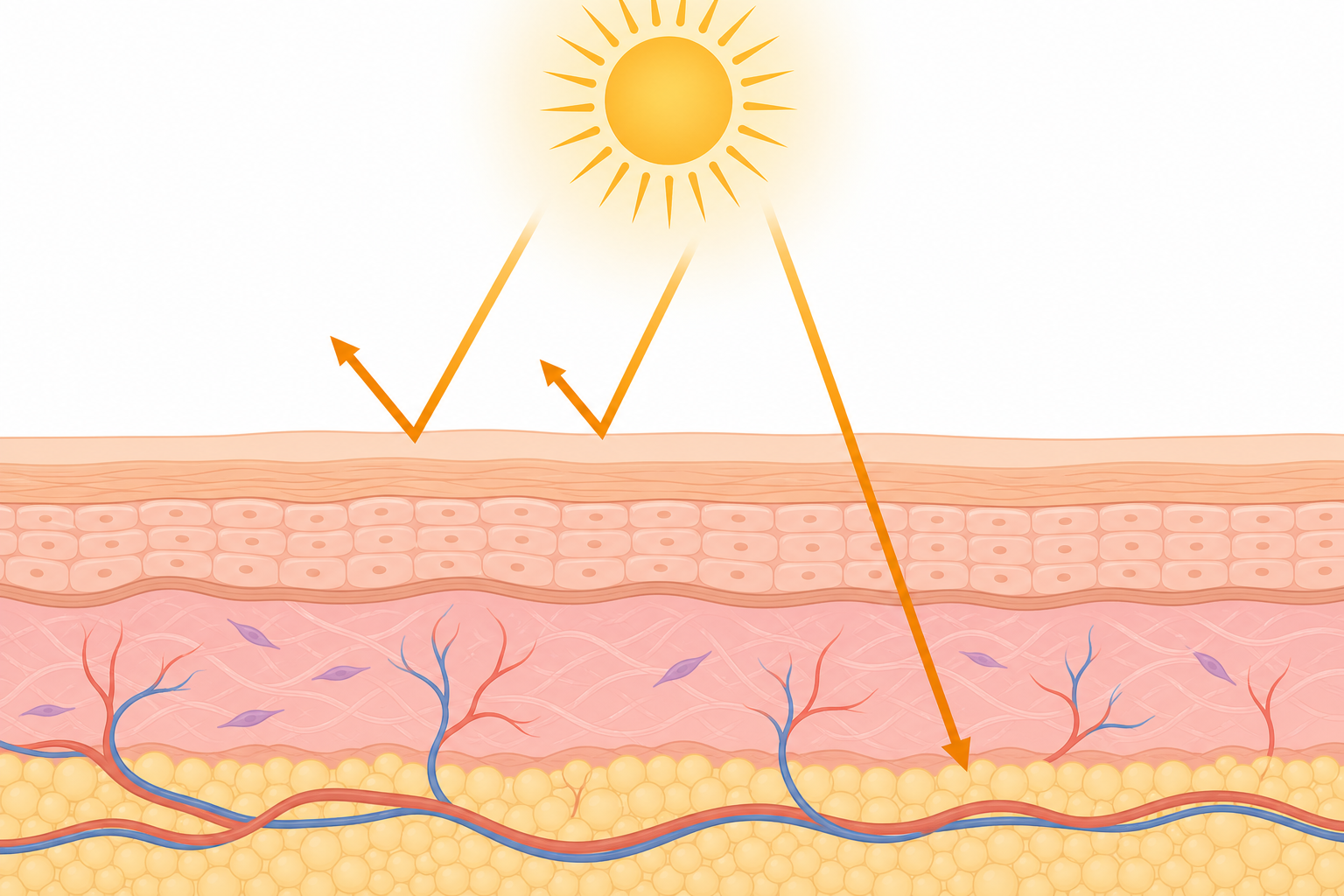
- UVB is mostly absorbed near the surface and is the main cause of sunburn and most skin cancers.
- UVA penetrates deeper and drives premature aging — wrinkles, sagging and pigmentation — and also contributes to skin cancer.
Because damage accumulates over a lifetime, daily protection matters even when you're not at the beach.
Your Protection Strategy
Broad-spectrum sunscreen of SPF 30 or higher is essential — apply generously and reapply every two hours (and after swimming or sweating). But physical protection is often even more reliable:
- A wide-brimmed hat
- UV-blocking (UV400) sunglasses
- Tightly woven or UPF-rated clothing
- Seeking shade during peak hours
Quick rule
If the UV Index is 3 or higher, use sun protection. Check it alongside the temperature before heading out — a cool, breezy day can still have dangerously high UV.
Go deeper: see our UV Safety Action Guide for a step-by-step routine.
Sources: World Health Organization (WHO), U.S. EPA SunWise, Skin Cancer Foundation.
Sources and further reading
These primary sources were used to check definitions, thresholds, safety guidance, and scientific context.
Sources reviewed: 2026-07-16
- World Health Organization: Radiation: The ultraviolet (UV) index
UV Index definition, reporting convention, and protection actions.
- World Health Organization: Ultraviolet radiation
Health effects and the recommendation to use sun protection from UVI 3.
What AnyWeather adds
We translate the global UV Index scale into a quick daily decision guide while keeping WHO protection thresholds intact.
This article is an independent synthesis of public sources; the listed institutions do not endorse AnyWeather. For weather or health risks, prioritize local official alerts and professional advice.
Frequently Asked Questions
What is the UV Index?
The UV Index is a standardized 0-to-11+ scale, developed with the World Health Organization, that measures the strength of the sun's ultraviolet radiation at a given place and time. The higher the number, the faster unprotected skin can be damaged.
At what UV Index should I wear sunscreen?
Use sun protection when the UV Index is 3 (moderate) or higher. At 6–7 (high) or above, avoid direct sun between 10 a.m. and 4 p.m., and at 8+ minimize outdoor exposure, as unprotected skin can burn quickly.
Can I get sunburned on a cloudy day?
Yes. Thin or broken cloud blocks only a small fraction of UV, so a significant amount still reaches your skin. You can burn on an overcast day, which is why checking the UV Index matters more than just looking at the sky.
What is the difference between UVA and UVB?
UVB is absorbed near the skin's surface and is the main cause of sunburn and most skin cancers. UVA penetrates deeper and is the main driver of premature aging like wrinkles and sagging. Broad-spectrum sunscreen protects against both.
Related Articles
Understanding Air Quality Index (AQI): Everything You Need to Know
What is AQI? How is it calculated? What do the different levels mean? This article explains the Air Quality Index to help you protect your respiratory health.
ReadHeat Index vs Feels Like: What's the Difference Between Actual and Feels Like Temperature?
Why does 20C sometimes feel like 10C? It's all about the 'Feels Like' temperature. Learn about wind chill and heat index to dress smarter.
ReadEl Niño vs La Niña: How Ocean Cycles Direct Global Weather
From grocery prices to hurricanes, from mild winters to droughts, El Niño and La Niña quietly steer weather worldwide. Here's what they are, why they happen, how long they last, and how scientists track them.
Read