
Lightning Safety: Essential Knowledge for Every Season
AnyWeather Editorial Team
Last updated: 2026-02-10
Based on public meteorological and environmental sources, plus AnyWeather data documentation.
The Lightning Threat
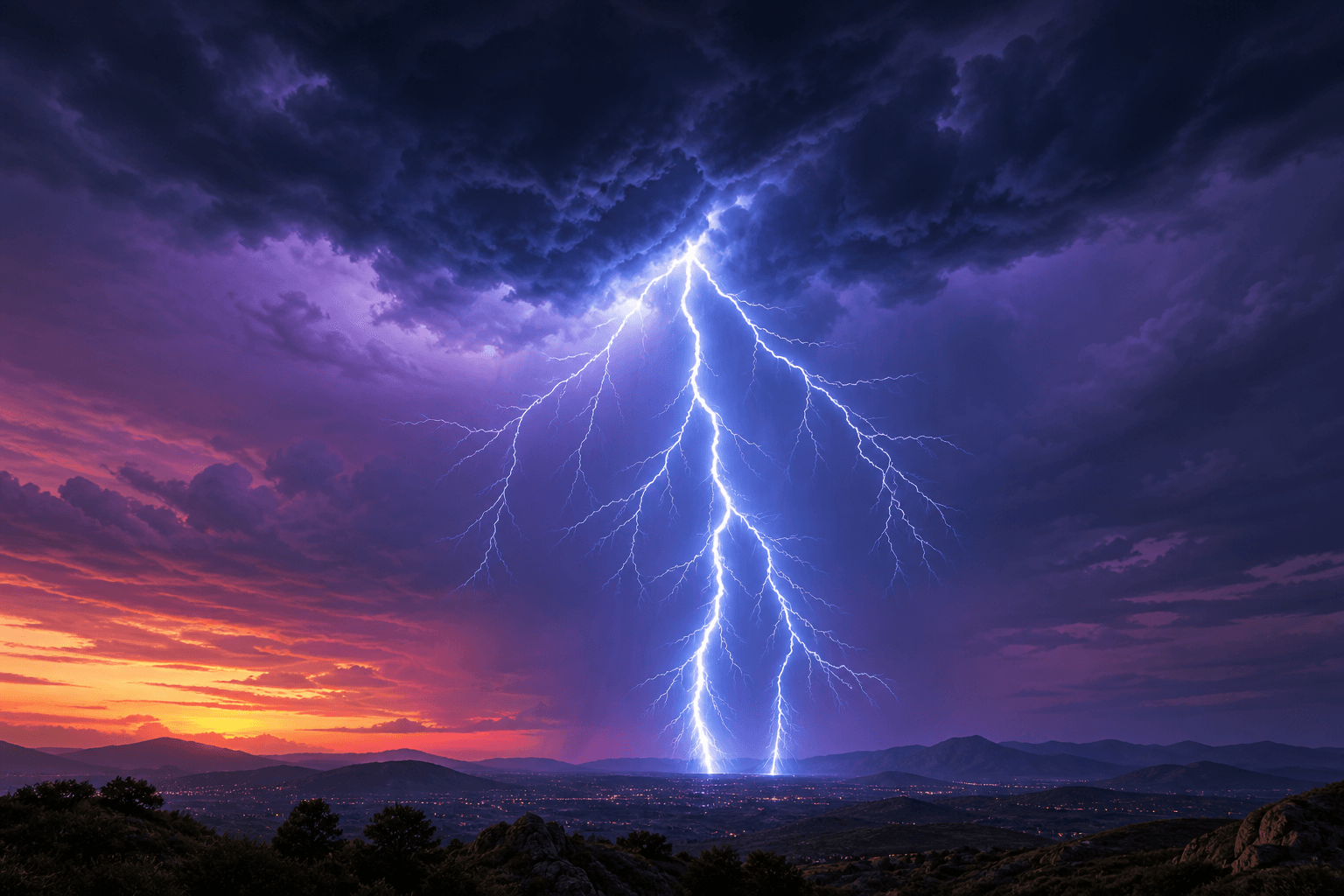
Lightning is one of nature's most dangerous and spectacular phenomena. Every year, lightning causes dozens of deaths and hundreds of injuries worldwide. Understanding lightning safety can save your life.
How Lightning Forms
Lightning is a massive electrical discharge caused by imbalanced charges within thunderstorm clouds. As ice particles collide within the storm, positive charges accumulate at the cloud top while negative charges gather at the base. When this charge separation becomes extreme, lightning strikes — either within the cloud (intracloud) or between the cloud and ground (cloud-to-ground).
A single lightning bolt can:
- Reach temperatures of 30,000 Kelvin (5x hotter than the sun's surface)
- Contain up to one billion volts of electricity
- Travel at 200,000 mph
The 30-30 Rule
Use this rule to gauge lightning danger outdoors:
- First 30: When you see lightning, count the seconds until you hear thunder. If it's less than 30 seconds, seek shelter immediately
- Second 30: Stay inside for 30 minutes after the last thunder you hear
Lightning Safety Rules
When Thunder Roars, Go Indoors
The only truly safe place during a thunderstorm is inside a substantial building or hard-topped vehicle. Picnic shelters, tents, and porches are NOT safe.
If You're Caught Outside
- NEVER lie flat on the ground
- DO NOT shelter under isolated trees
- AVOID hilltops, open fields, and water
- Get low in a crouched position if no shelter is available
- Spread out if in a group — being close together increases risk
After the Storm
- Wait 30 minutes after last thunder before resuming outdoor activities
- Don't touch fallen power lines or puddles near them
- Check on family members who were outdoors during the storm
Common Lightning Myths Debunked
- Myth: Rubber tires protect you in a car. Truth: It's the metal roof, not the tires, that provides protection
- Myth: Lightning never strikes the same place twice. Truth: The Empire State Building is struck about 23 times per year
- Myth: If it's not raining, there's no lightning danger. Truth: "Bolts from the blue" can strike 10+ miles from a storm
Source: National Weather Service, NOAA Lightning Safety
Frequently Asked Questions
What is the 30-30 rule for lightning?
When you see lightning, count the seconds until you hear thunder. If it's 30 seconds or less, the storm is close enough to be dangerous — seek shelter immediately. Then wait at least 30 minutes after the last thunder before going back outside.
Where is the safest place during a thunderstorm?
The safest places are inside a substantial building or a hard-topped vehicle. Picnic shelters, tents, porches, and open structures are NOT safe. Avoid open fields, hilltops, isolated trees, and water.
What should I do if I'm caught outside in a thunderstorm?
Get to a safe building or vehicle as fast as possible. If none is available, avoid isolated trees, hilltops and water, never lie flat on the ground, and if in a group, spread out. Crouch low only as a last resort.
Can lightning strike when it's not raining?
Yes. 'Bolts from the blue' can strike more than 10 miles (16 km) away from a storm, in areas with no rain and even blue sky overhead. If you can hear thunder, you are close enough to be struck.
Related Articles
Understanding Air Quality Index (AQI): Everything You Need to Know
What is AQI? How is it calculated? What do the different levels mean? This article explains the Air Quality Index to help you protect your respiratory health.
ReadHeat Index vs Feels Like: What's the Difference Between Actual and Feels Like Temperature?
Why does 20C sometimes feel like 10C? It's all about the 'Feels Like' temperature. Learn about wind chill and heat index to dress smarter.
ReadThe UV Index Guide: More Than Just Sunburn
Invisible but powerful. Learn what the UV Index means, what each level requires, how UVA and UVB damage your skin, and the smartest ways to protect yourself.
Read