
How to Read Weather Symbols: A Complete Guide to Forecast Icons
AnyWeather Editorial Team
Last updated: 2026-01-20
Based on public meteorological and environmental sources, plus AnyWeather data documentation.
Understanding Weather Symbols
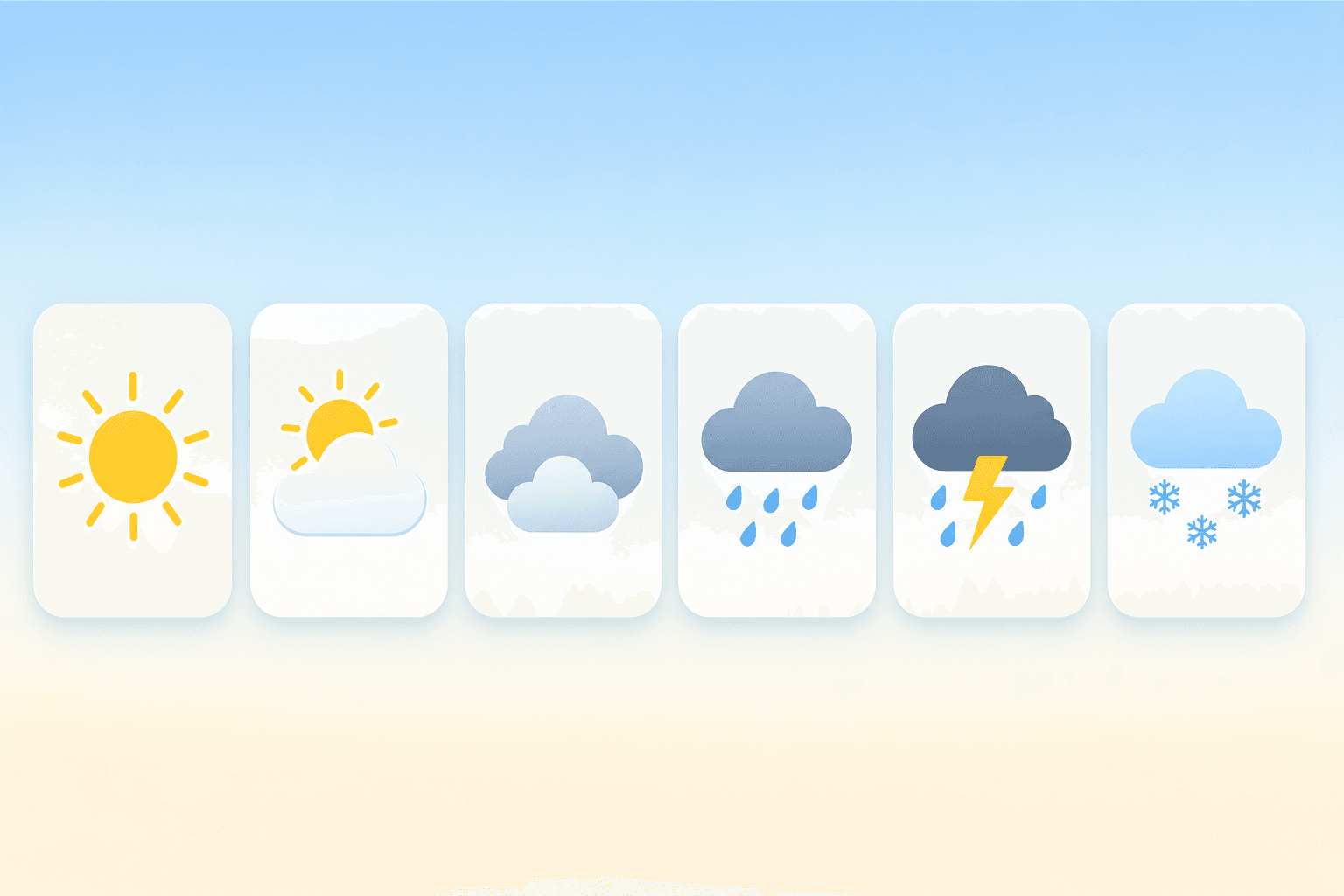
Weather apps use symbols to communicate conditions at a glance. Understanding these icons helps you plan your day more effectively. Here's a comprehensive guide to common weather symbols.
Clear and Cloudy Conditions
- ☀️ Sun: Clear sky, predominantly sunny conditions
- 🌙 Moon: Clear night sky
- ⛅ Sun behind cloud: Partly cloudy (some clouds, some sun)
- ☁️ Cloud: Overcast or mostly cloudy
- 🌫️ Fog: Fog, mist, or low clouds reducing visibility
Precipitation Symbols
- 🌧️ Cloud with rain: Rain expected
- 🌧️🌧️ Two rain clouds: Heavy rain
- ⛈️ Thunder cloud: Thunderstorm with rain
- 🌨️ Cloud with snow: Snow expected
- 🌨️🌨️ Snow showers: Intermittent, localized snow
- 🌨️❄️ Sleet: Snow and rain mixed
- 🌧️⛈️ Rain and thunder: Showers and thunderstorms
- ☔ Umbrella: Rain possible, bring protection
Temperature and Condition Symbols
- ❄️ Snowflake: Cold temperatures, potential snow
- 🔥 Fire or thermometers: Hot weather warning
- 💨 Wind gusts: Strong winds expected
- 🌡️ Thermometer: Temperature indicator
Wind Direction
Wind direction shows where the wind is coming from, not where it's going to. An arrow pointing from west means westerly winds — winds coming from the west and blowing eastward.
UV Index Indicator
The UV index is often shown with sun intensity levels:
- Low UV: Safe for most skin types outdoors
- Moderate UV: Protection recommended
- High UV: Seek shade during midday hours
- Very High/Extreme UV: Extra protection essential
Reading the Full Forecast
Don't rely on symbols alone. Always check:
- Temperature range (high/low)
- Precipitation probability percentage
- Wind speed and direction
- Humidity levels
- Any weather alerts or warnings
A forecast showing "partly cloudy" with 60% precipitation chance likely means storms are possible — read beyond the main icon for the full picture.
Frequently Asked Questions
What do the common weather symbols mean?
The most common symbols are: a sun (clear), a cloud (cloudy/overcast), a sun behind a cloud (partly cloudy), a cloud with raindrops (rain), a cloud with snowflakes (snow), a lightning bolt (thunderstorm), and horizontal lines (fog or mist). A raindrop with a percentage shows the chance of precipitation.
What does a sun with lines underneath it mean?
Horizontal lines beneath a sun or a sun-and-cloud icon usually indicate fog or mist. The more lines shown, the lower the visibility — a useful heads-up for early-morning or nighttime driving.
How do you read wind direction on a weather symbol?
A wind arrow shows where the wind is coming FROM, not where it is going. An arrow pointing west means a west wind — air moving from the west toward the east. Barbs or short lines on the arrow indicate wind strength.
What does the percentage next to a rain symbol mean?
That is the probability of precipitation — the chance of measurable rain or snow during that period. For example, 40% means there is a 40% chance of precipitation; it does not indicate how heavy or how long the rain will be.
Related Articles
Understanding Air Quality Index (AQI): Everything You Need to Know
What is AQI? How is it calculated? What do the different levels mean? This article explains the Air Quality Index to help you protect your respiratory health.
ReadHeat Index vs Feels Like: What's the Difference Between Actual and Feels Like Temperature?
Why does 20C sometimes feel like 10C? It's all about the 'Feels Like' temperature. Learn about wind chill and heat index to dress smarter.
ReadThe UV Index Guide: More Than Just Sunburn
Invisible but powerful. Learn what the UV Index means, what each level requires, how UVA and UVB damage your skin, and the smartest ways to protect yourself.
Read